
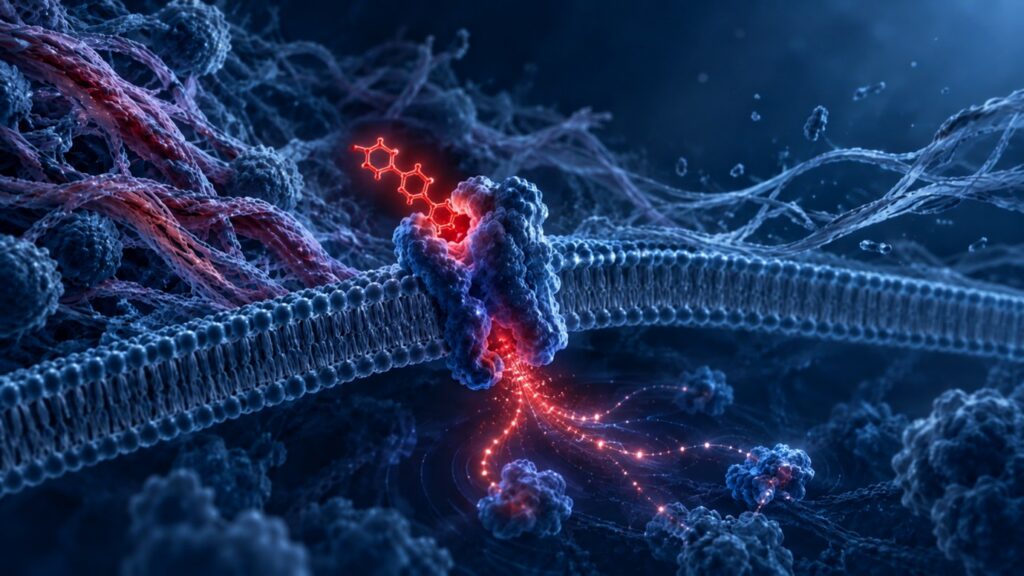
The NPR-C/VIP/cGMP mechanism
Vasoactive intestinal peptide (VIP) is a naturally occurring signalling molecule found throughout the body. Among its many biological roles, VIP has been shown to exert potent antifibrotic effects, including in published studies by the Vectus research team, reducing the production of pro-fibrotic mediators and restoring normal tissue architecture.
VIP exerts these effects primarily through a receptor called NPR-C. When VIP binds to NPR-C, it triggers a signalling cascade inside the cell that increases levels of cyclic GMP (cGMP), a key molecular messenger involved in regulating inflammation, cell proliferation and tissue remodelling. This increase in cGMP drives a shift in the cellular environment away from fibrosis and toward tissue restoration.
Critically, this mechanism is distinct from all currently approved antifibrotic therapies, which target different pathways and have not demonstrated the ability to reverse established fibrosis. The NPR-C/cGMP pathway represents a genuinely different biological approach, one with the potential not just to slow fibrotic disease, but to reverse it.
VB0004 was designed to selectively engage this pathway as a small-molecule VIP mimetic and NPR-C agonist, delivering the antifibrotic effects of VIP in an orally administered, once-daily formulation.

Macrophage Activation
VB0004 also appears to act through a second mechanism, activating macrophages, specialised immune cells capable of engulfing and degrading established scar tissue.
Macrophages are white blood cells that live in almost every tissue in the body, where they clear away dead cells, debris and pathogens. They change their behaviour depending on the signals around them, and one of their roles is tissue repair: in this state they release enzymes that break down excess collagen and help restore normal tissue structure.
VB0004's dual mechanism of action, targeting fibrosis through both NPR-C/cGMP signalling and macrophage-mediated clearance of collagen deposits, may underpin the reversal of established fibrosis observed in preclinical models.